
01
Regulatory status
Effective
In force and applicable from the stated effective date.
iPivot Market Insights
Case studies, market developments and regulatory context for founders, investors and advisers navigating growth capital and public markets.
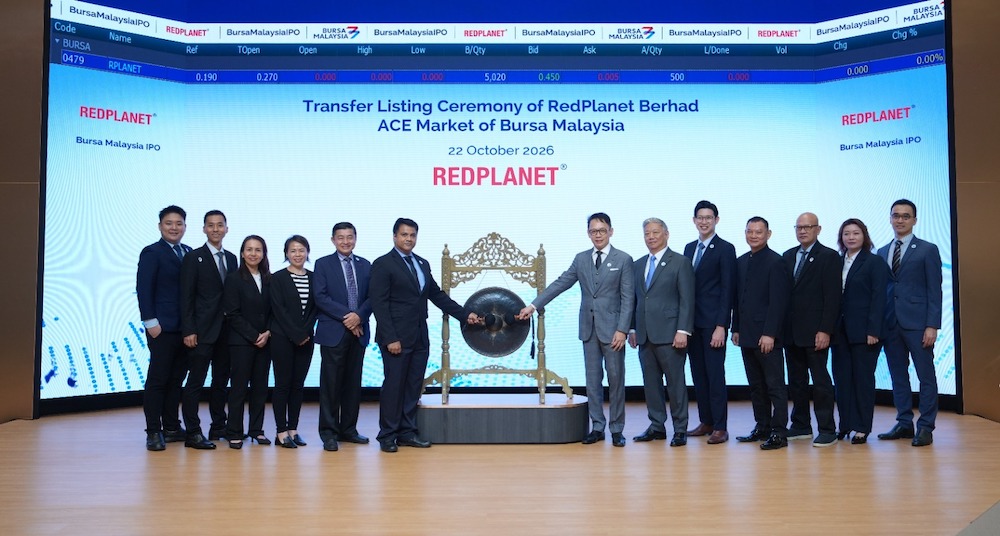
Capital-market journey
A Malaysian example of how a company can build track record, governance and market visibility before stepping up to a broader public-market platform.
Read the case study →

IPO, scale & ownership
A long-cycle case study in what happens after capital arrives: integration, operating performance, governance, ownership alignment and eventually delisting.
Read the case study →
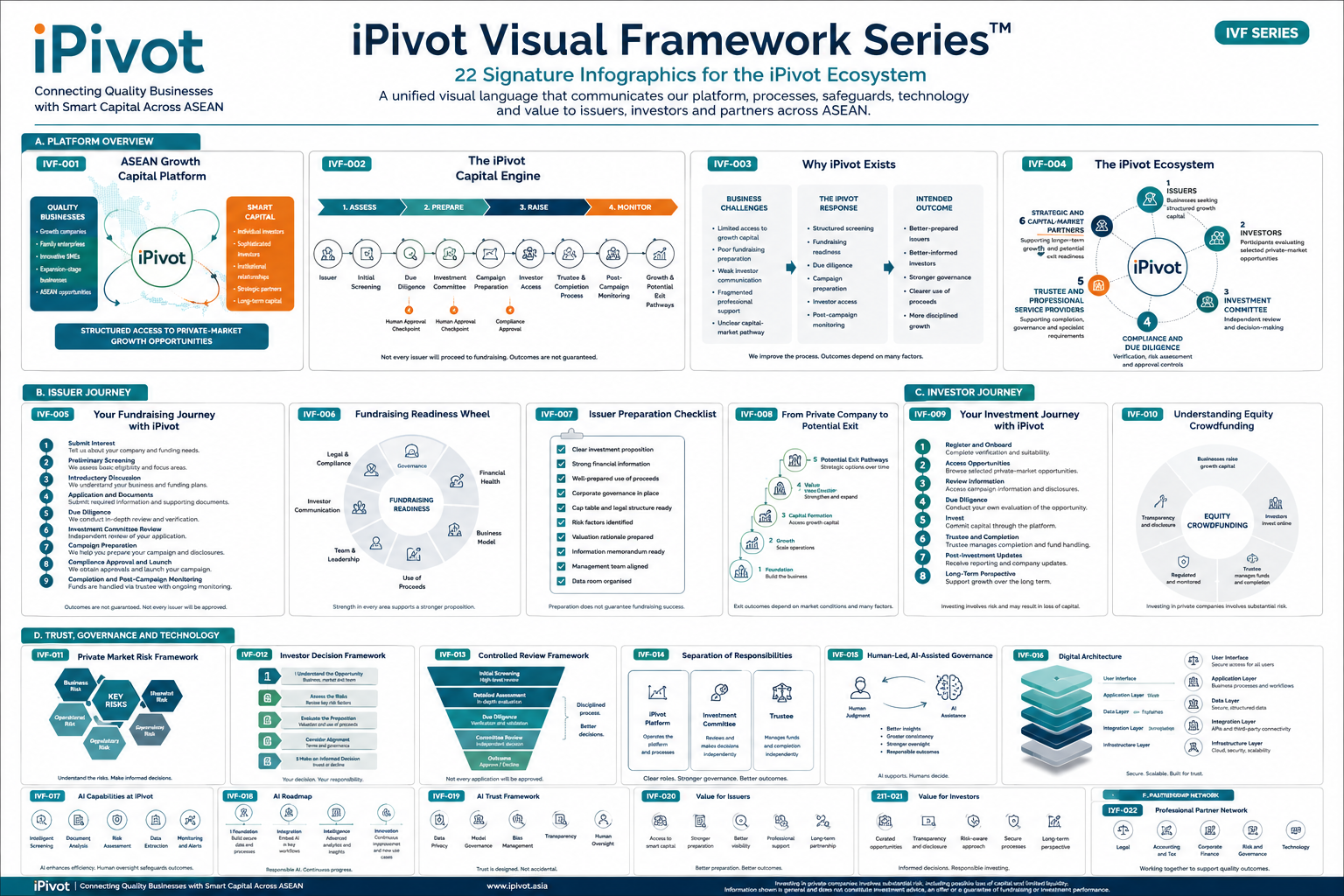
Six intelligence lenses
Case studies
Corporate journeys with public-source evidence and practical founder lessons.
Market intelligence
ECF, Bursa, private capital, valuation and regional market context.
Regulatory status
Clear separation between effective requirements, proposals and historical rules.
Research discipline
Evidence before interpretation
Every regulatory or market-development record should show the primary source, publication date and current status before commentary is added.
Regulatory status example
A proposal or consultation should be labelled as such and should not be presented as an effective requirement before the relevant authority finalises and brings it into force.
Primary-source rule
Regulatory information should be checked against the relevant primary source and applicable professional advice before being relied upon for a decision.
Business case studies
The point is not to celebrate or criticise companies. It is to study how capital, execution, governance, ownership and market conditions interact over time.
Malaysia
Business case study

From LEAP to ACE: Building the Next Capital-Market Chapter
RedPlanet's journey shows how a company can use the LEAP Market as a stepping stone—building governance, operating scale and market discipline before opening itself to a broader investor base and fresh growth capital on the ACE Market.
Malaysia
Business case study
From Blockbuster IPO to a New Chapter
A landmark 2012 listing unlocked major capital and scale. The longer story shows why public-market success still depends on execution, capital discipline, stakeholder alignment and ownership strategy.

Singapore
Business case study
Innovation, Overreach and Reinvention
Xpress grew from a modest printing business into a leader in time-sensitive financial printing. Its dot-com diversification shows how a strong core can be weakened by expansion outside a durable competitive advantage.

Malaysia
Business case study
Innovation, Leverage and Survival
Artwright evolved from drafting boards into workplace systems and became a listed growth story. The Asian Financial Crisis exposed the danger of aggressive capacity expansion financed with debt.

Indonesia
Business case study
Rebuilding After the 1998 Crisis
The Asian Financial Crisis severely damaged the Salim Group, forcing a major restructuring. The recovery centred on protecting Indofood, rebuilding leadership and later diversifying from a stronger operating base.

Vietnam
Business case study
From Expansion to Debt Crisis to Recovery
HAGL expanded across multiple sectors, accumulated severe debt and liquidity pressure, then simplified the business and refocused on agriculture. By 2025, the recovery had become measurable.

Singapore
Business case study
Build, Falter, Reinvent
Ron Sim built OSIM from a local trading business into an international wellness brand, endured a major setback with Brookstone, recovered, privatised the company and later expanded through V3 into a broader consumer portfolio.
Status framework
Interpret before you react
The label tells the reader how a development should be interpreted before any analysis or commentary is added.
Regulatory status
In force and applicable from the stated effective date.
Regulatory status
Finalised but not yet in force.
Regulatory status
Published for feedback or consideration; not treated as an effective rule.
Regulatory status
Replaced by later guidance, rules or requirements.
Regulatory status
Useful for context but not presented as current requirements.
Capital markets
Explore public-market structures and long-term capital pathways without implying a guaranteed exit or listing outcome.
Explore capital markets →
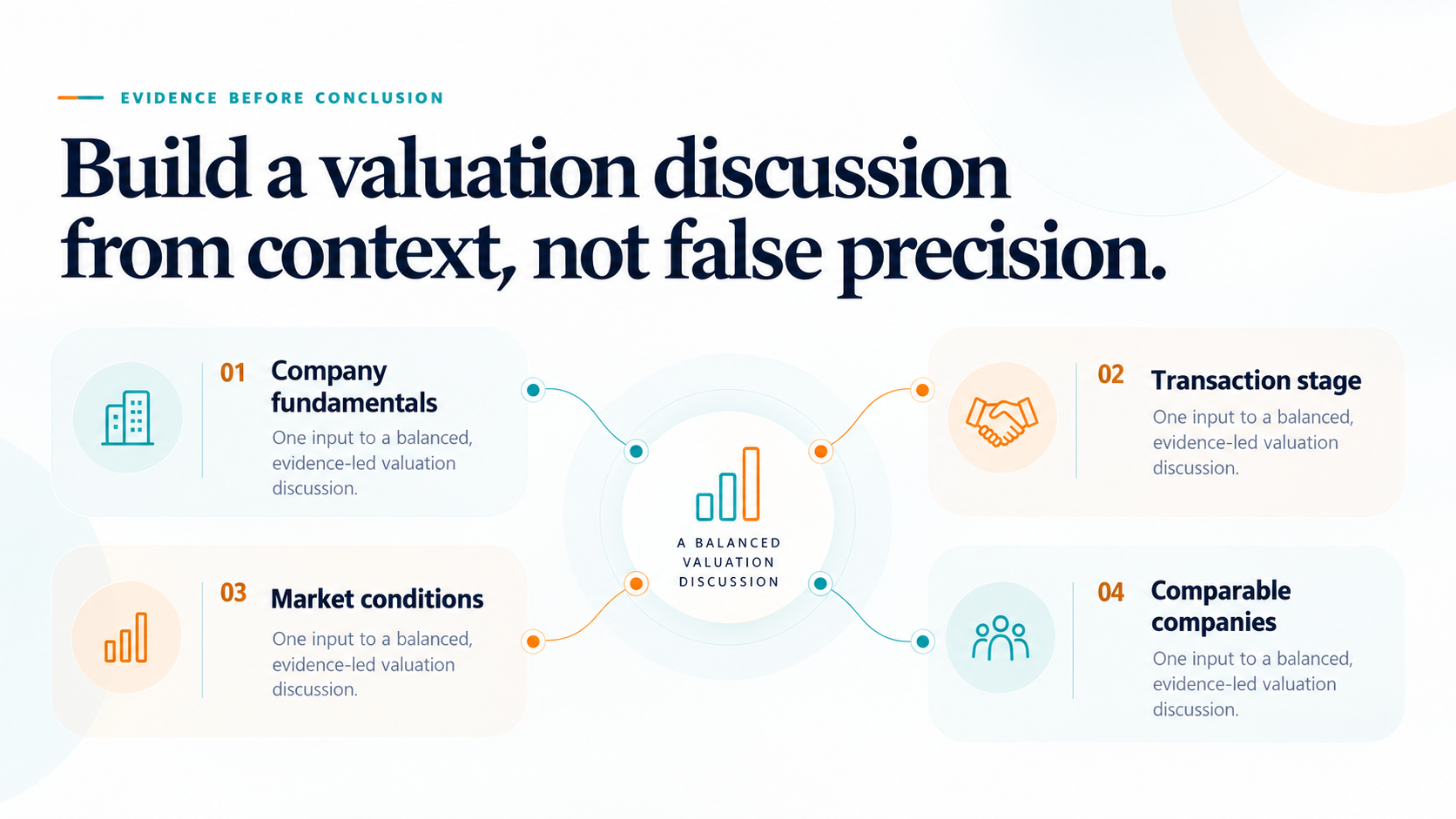
Valuation context
Review valuation assumptions against available company evidence, market observations and transaction context.
Explore valuation context →
Knowledge Centre
Go deeper into investor education, issuer readiness, regulatory updates and practical capital-market explainers.
Open Knowledge Centre →
Market context
Research categories and status labels help distinguish effective rules from consultations, proposals and historical requirements. Primary-source verification and human compliance review remain the control points.